Parallel Session: Leading Higher Education through Digital and Intelligent Innovation: Building a New Ecosystem for Talent Development
Programme Director,
Your Excellency, Dr Huai Jinpeng, Minister of Education of the People’s Republic of China,
Honourable Ministers and Deputy Ministers,
Distinguished delegates,
Ladies and Gentlemen,
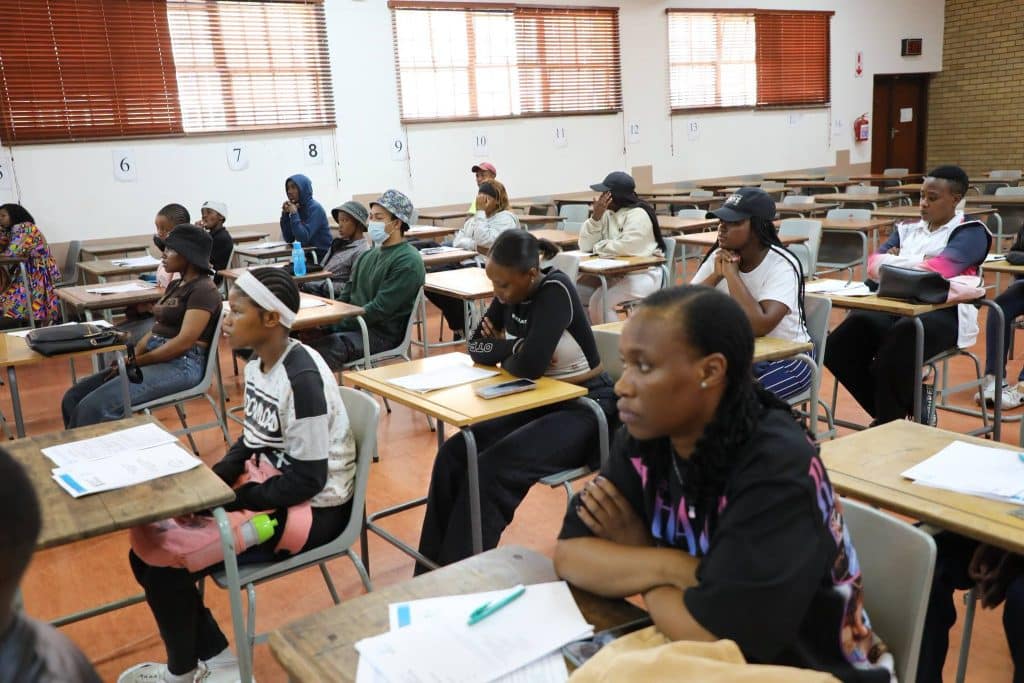
Somewhere in South Africa, at this very moment, a young woman is sitting in a community learning centre in a rural district. She walked several kilometres to get there this morning. The electricity is intermittent, the connectivity is unreliable and the devices are shared. She is studying for a qualification that she believes will change the direction of her life.
She has heard about artificial intelligence. She has encountered it in headlines, in the speeches of world leaders, in the conversations her teachers are beginning to have about the future of learning. She carries quietly, a question that no algorithm has yet been able to answer:
“Is this for me? Or is this being done to me?”
I want to suggest to this distinguished gathering that this is, in fact, the most important question before us today. Not the technical question of how AI systems are architected. Not the pedagogical question of how machine learning is integrated into curriculum design. But the political and human question of whether artificial intelligence will advance the dignity, inclusion, and development of the majority of the world’s people, or whether it will deepen the inequalities that already scar our societies.
Everything else we discuss here flows from how we answer that question.
Programme Director,
We meet at a moment of genuine technological possibility. The capabilities of artificial intelligence are evolving at a pace that challenges the assumptions on which our education systems, labour markets, and governance frameworks were built. This is real, and it deserves serious engagement.
But it is equally important to name something clearly: this technological transition, like all major technological transitions in history, is not neutral. It arrives embedded with existing power relations. It reflects the priorities of those who design it, fund it, and deploy it. And unless we govern it deliberately, with justice and inclusion as organising principles, it will not transcend the inequalities of the world it inherits. It will reproduce and intensify them.
This is not pessimism. It is political realism. It is precisely from this vantage point the vantage point of a developmental state in the Global South, that South Africa enters this conversation.
South Africa approaches digital transformation and artificial intelligence not as a neutral technical exercise, but as a profoundly political project. We are a country forged through centuries of colonial dispossession, racial exclusion, and structured inequality. Our democracy was built on an unfinished promise: that the resources, capabilities, and opportunities of our society would be shared equitably, that the future would belong to everyone, not merely to those who had already captured the past.
Digital transformation either advances that project or sets it back. There is no third option.
What does digital exclusion look like in practice? It looks like a student without affordable connectivity who cannot access a virtual lecture. It looks like a TVET college without adequate devices, bandwidth, or digital learning systems, competing in name only against institutions that have all three. It looks like an education system operating almost entirely in dominant global languages, quietly excluding millions from meaningful participation in their own futures.
These are not marginal cases. In South Africa, they describe the daily reality of the majority.
And therefore, our investment in digital infrastructure, open learning systems, blended models, and AI-enabled student support is not merely about keeping pace with global trends. It is about confronting a structural inequality that, if left unaddressed, will simply be reproduced in digital form — faster, at greater scale, and with less visibility than before.
Ladies and Gentlemen,
One dimension of this discussion that I believe deserves far more serious attention is the role of technical and vocational education and training.
Much of the global conversation about AI and education is, implicitly, a conversation about elite universities, research institutions, and high-skill knowledge workers. That conversation matters. But it is radically incomplete.
The future economy will not be built only by data scientists and AI researchers. It will be built by artisans, technicians, renewable energy specialists, robotics engineers, healthcare technologists, and digitally capable workers across every sector of production and service. People whose skills are practical, applied, and in many ways irreplaceable.
For Africa, where tens of millions of young people enter labour markets every year, many without access to university education the question of how artificial intelligence connects to technical and vocational training is not a secondary matter. It is central to any serious development agenda.
If AI and digital transformation are to contribute meaningfully to African development, they must connect directly to industrialisation, manufacturing, infrastructure, and employment creation. They must be embedded in the training systems that serve young people who will build the continent with their hands, their technical knowledge, and their ingenuity.
This is why South Africa is increasingly prioritising industry-linked learning, work-integrated learning, micro-credentials, and flexible pathways that allow people to enter, exit, and re-enter learning throughout their lives. The notion that education is something that happens once, in youth, in an institution, before the real world begins, that notion is over. The future demands systems that are as dynamic as the economies they serve.
In this regard, Programme Director, we value the growing cooperation between South Africa and China in vocational education, technical training, and digital skills development. China’s experience with large-scale technical education, including the Luban Workshop model and the deliberate integration of digital skills into vocational curricula offers genuine lessons for the African context. We are committed to deepening this partnership, and I look forward to the continued strengthening of our bilateral cooperation in this area.
Programme Director,
Let me turn now to what I regard as the defining governance challenge of our era.
The frameworks, standards, and architectures that will govern artificial intelligence are being developed primarily in a small number of technologically advanced countries and by a relatively small number of powerful corporations. The Global South is, for the most part, an observer of this process rather than a participant in shaping it.
This must change, and it must change urgently!
Not because Global South countries should simply be given a seat at a table whose terms have already been set by others. But because the governance of AI cannot be legitimate, effective, or just without incorporating the developmental realities, the ethical traditions, the linguistic diversity, and the social priorities of the majority of the world’s people. A governance architecture designed without us will inevitably be designed against us not through malice, but through indifference.
Responsible AI governance requires transparency: citizens and institutions must be able to understand and interrogate the systems making decisions that affect their lives. It requires accountability: when AI systems cause harm, there must be meaningful redress. It requires active protection against algorithmic discrimination: systems trained on biased data do not simply reflect existing inequality they amplify it and give it the false authority of mathematical objectivity.
But beyond these procedural requirements lies a more fundamental commitment: that AI must be deployed in service of human development, not as a substitute for it. We must be especially vigilant about the commercialisation of educational AI. Knowledge is a public good. Education is a human right. When AI systems in education are designed primarily to extract profit, the interests of learners and the public interest are subordinated to the interests of shareholders. That is not a technical failure. It is a political failure, and we must name it as such.
The Global South must not only develop domestic AI governance frameworks. We must participate actively in shaping global standards, in UNESCO processes, in multilateral forums, and in the emerging architecture of international AI governance. Africa cannot simply consume technologies designed elsewhere, governed by frameworks we had no hand in crafting. We must be producers of the norms that will define this era, not merely subjects of them.
And this conference, hosted here in Hangzhou, bringing together voices from across the world, is part of that necessary work.
Distinguished Delegates,
Every major technological transition in history has forced humanity to confront the same essential questions about power, labour, ethics, and the organisation of society. The printing press. The industrial revolution. The emergence of the internet. Each time, the technology itself was neither the salvation nor the catastrophe that its partisans and its critics predicted. What determined the outcome was politics, the contest over who controlled the technology, who bore its costs, and who captured its benefits.
Artificial intelligence is no different.
And so the question before us today is not primarily technical. It is political. It is whether we possess the imagination, the solidarity, and the collective will to ensure that this extraordinary technology serves the many rather than the few, that it expands human possibility rather than concentrating it in fewer and fewer hands.
South Africa comes to this conversation not with all the answers, but with a clear conviction: that education must remain a fundamentally human project. That technology is a tool in service of human development, not the other way around. And that the measure of any education system, however digitally sophisticated, is whether it advances justice, dignity, and the full development of every person it touches.
The young woman in that community learning centre in rural South Africa is not waiting for us to resolve abstract questions about AI governance in the comfort of international conferences. She is waiting for us to make choices, political choices, investment choices and governance choices that determine whether the technology of this age becomes part of her liberation, or simply another mechanism of her exclusion.
She has asked us a question. Let us make sure that, when she asks it again in ten years’ time, we can answer it honestly.
I thank you.