By Sivuyisiwe Hombile
In celebration of Youth Month, the Department of Public Service and Administration (DPSA) hosted a vibrant Youth Engagement Programme at the Vryheid Sports Field in Zululand District Municipality. The event aimed to empower, uplift, and inform young people, bringing government closer to communities through streamlined procedures and protocols, enabled by the interconnectedness of institutions and guided by the District Development Model (DDM).
The road leading to the event was lined with local vendors selling fresh produce, reflecting the region’s strong agricultural roots. This set the tone for Abaqulusi Mayor Mkhwanazi’s heartfelt address, where he urged the community to return to sustainable, plant-based production and revive the region’s former farming glory. “Let us take ownership of our land again and restore the dignity that comes with feeding ourselves,” said the mayor, recalling the vibrant agricultural culture of his youth.
True to the spirit of Batho Pele, young people were given the platform to voice their concerns directly to leaders. They raised serious grievances, most notably the absence of a local skills development centre. Without such a facility, many remain trapped in the NEET (Not in Education, Employment, or Training) category, fuelling the triple challenge of poverty, unemployment, and inequality. Zululand, like much of KwaZulu-Natal, faces a staggering 46% youth unemployment rate.
Another pressing issue was the difficulty many encounters in accessing identity documents, a barrier that prevents them from securing government support, further education, and job opportunities.
The youth also pleaded for consistency in government-led initiatives, highlighting that too often programmes are launched but not sustained.
Responding to these concerns, Minister of Public Service and Administration Mzamo Buthelezi reaffirmed the department’s commitment to long-term impact: “We are not here to make promises, we are here to work with communities and ensure that what is started is followed through.”
A promising solution raised was the establishment of cooperatives. Since co-ops are community-based, they foster accountability and self-reliance, unlike outsourced solutions, which often lack transparency and fail to meet local needs. The call for practical, inclusive development also included strong criticism of the Life Orientation subject taught in high schools. Many youth felt the curriculum does not equip them with relevant technical or entrepreneurial skills, widening the gap between schooling and real-world preparedness.
One of the most repeated calls to action was the urgent need to repurpose the 11 abandoned farming sites in the region. The youth stressed that these “white elephant” facilities could be refurbished as agricultural hubs, training centres, or innovation spaces, creating employment opportunities while advancing food security in Zululand.
Minister Buthelezi closed the engagement by reaffirming government’s dedication to tangible progress, saying: “Youth are not just the leaders of tomorrow, they are the change-makers of today. If we invest in them, we invest in a better future for all South Africans.”
As the sun set over Zululand, the message was clear: the youth are ready to lead, but they need support, infrastructure, and action. The future lies not only in high-level policies but also in grassroots engagement, consistent support, and the power of local solutions. With the energy witnessed at the Vryheid Sports Field, the seeds of transformation have been planted and it is time to nurture them into lasting change.
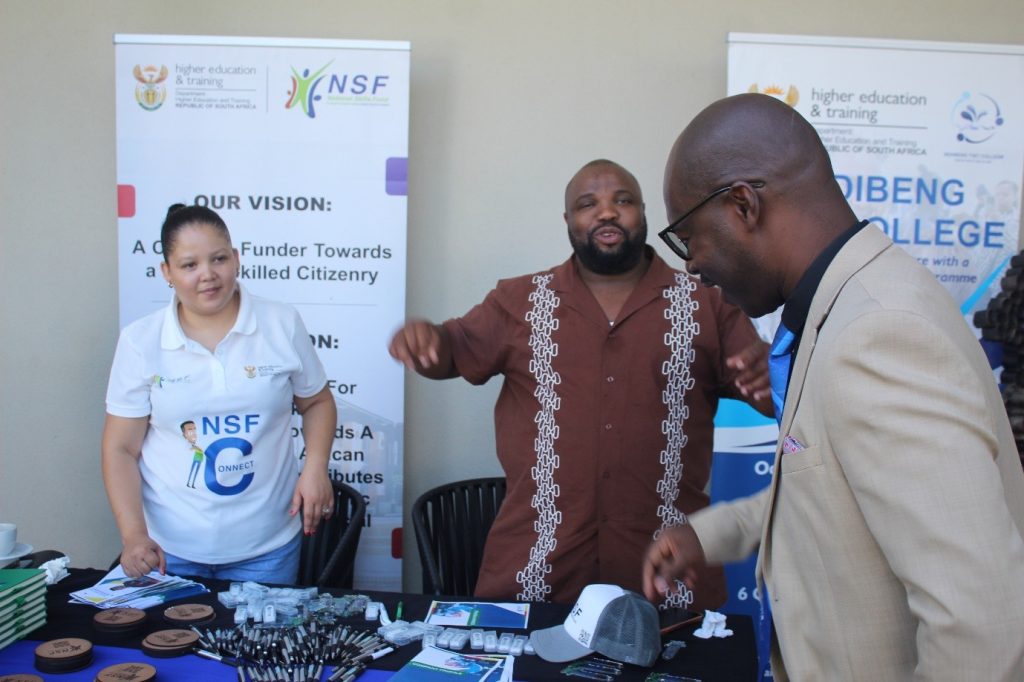
The National Skills Fund (NSF) is also making a significant impact in the Zululand region through partnerships with Skills Development Providers (SDPs) such as Blue Elevator, Rankin Training Solutions, and MTL Training and Projects. These collaborations aim to address some of the gaps identified by the youth at the event. Programmes focusing on retention, practical application, and sustainability offer workplace simulation training in agriculture, hospitality, mechanical studies, material handling, forklift operation, diesel and earthmoving mechanics, electrical studies, and hydraulics. Through these initiatives, the NSF is equipping young people in Zululand with the skills and confidence needed to participate meaningfully in the economy.