By Denira Gounden
In a rural community where unemployment and poverty continue to constrain economic opportunities, access to practical skills can become the starting point for something much bigger — the ability to earn an income, create opportunities and build a more sustainable future.
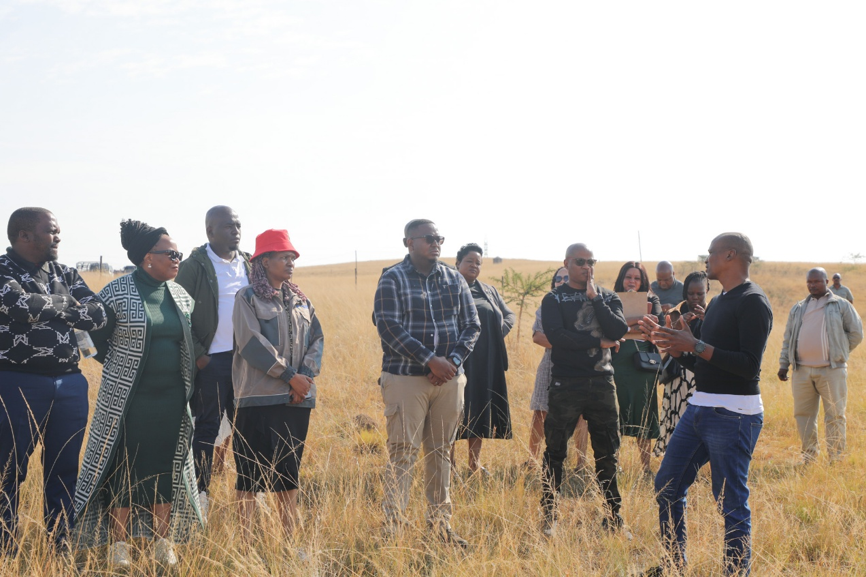
This was evident when the National Skills Fund (NSF) Skills Development Implementation (SDI) senior management team conducted a monitoring visit to the NSF-funded Inkosi Phathisizwe Chiliza Mkhombandlela NPO Learnership Project in Emadungeni, KwaZulu-Natal.
Backed by an NSF investment of R69.6 million, the project was approved to provide 400 beneficiaries with occupational training aimed at improving employability, supporting entrepreneurship and strengthening economic participation within the rural community.
The initiative comprises four occupational learnership programmes: Plant Production, Animal Production, Mixed Farming Systems and Clothing Manufacturing Processes. The programmes were selected to provide beneficiaries with practical competencies relevant to agriculture and manufacturing while responding to broader skills-development priorities.
The project commenced in May 2024, with implementation beginning in August 2024. Importantly, training extends beyond the classroom, incorporating farming operations and practical workplace exposure so that learners can develop competencies that can be applied in employment, entrepreneurship and income-generating activities.
For beneficiaries in Emadungeni, this means that skills development has the potential to extend beyond obtaining a qualification. Agricultural competencies in areas such as crop production, livestock management and mixed farming can contribute to livelihoods, food production and opportunities for greater economic self-sufficiency.
Building sustainability beyond training
During the monitoring visit, the SDI senior management team assessed implementation across the occupational training sites, engaged with learners and the Skills Development Provider (SDP), and identified areas requiring improvement.
Ms Kgaogelo Hlongwane, who was serving as Acting Chief Director: Regional Skills Development Implementation at the time of the visit, emphasised that training resources should be managed in a manner that contributes to the project’s long-term sustainability.
“When the NSF comes back, there must be at least eight tractors. One tractor must buy another tractor so that when the current one gets old, the newer one works,” said Ms Hlongwane.
Her message highlighted a broader objective of the intervention: NSF-funded projects should seek to create sustainable economic value rather than becoming dependent indefinitely on the initial investment.
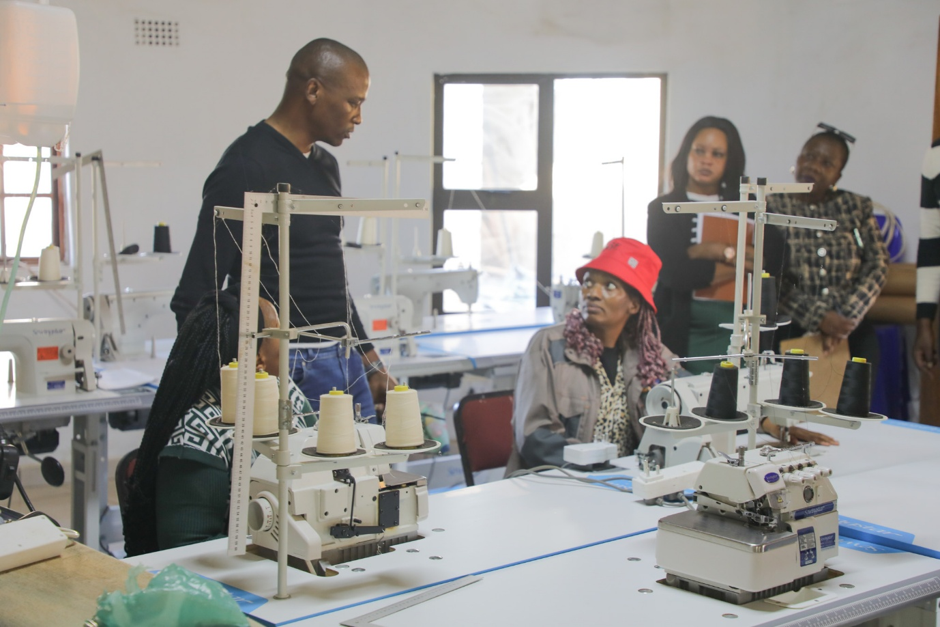
The delegation provided strategic guidance aimed at strengthening the quality and long-term impact of the programme. Recommendations included improving learner safety, logistical arrangements and training infrastructure to create a more conducive environment for beneficiaries.
The SDP was also encouraged to strengthen its linkages with industry and explore opportunities that could improve learners’ prospects for employment, entrepreneurship and self-sufficiency after completing their programmes.
These interventions form an important part of NSF oversight. Monitoring is not only about determining whether training has taken place; it is also about assessing whether public investment is creating the conditions necessary for beneficiaries to translate their skills into meaningful economic opportunities.
Three programmes successfully completed
Despite implementation challenges that affected the project’s original completion timeframe, significant progress has been recorded.
Three of the four approved learnership programmes have been completed, marking an important milestone for the project and the beneficiaries who have acquired occupational knowledge and practical experience through the intervention.
At the time of the visit, the remaining Clothing Manufacturing Processes programme comprised 50 learners who required approximately one additional month of training to complete the programme.
The progress achieved demonstrates the potential of targeted skills-development investment to expand opportunities in communities that may otherwise have limited access to occupational training.
The NSF’s R69.6 million investment in 400 beneficiaries also reflects the Fund’s broader commitment to extending skills-development opportunities to rural and underserved communities and ensuring that geography does not become a barrier to acquiring skills.
As the Inkosi Phathisizwe Chiliza Mkhombandlela NPO Learnership Project moves towards completion, its longer-term measure of success will extend beyond the number of learners trained. It will ultimately be reflected in what beneficiaries are able to do with those skills — whether entering employment, pursuing entrepreneurship, generating income or contributing to economic activity within their communities.
Through continued monitoring and engagement with implementing partners, the NSF remains focused on ensuring that skills-development investment translates into practical skills, sustainable opportunities and meaningful participation in South Africa’s economy.