The partnership between South Africa and the People’s Republic of China in technical and vocational skills development reached a significant milestone in January 2026 as 36 South African TVET students returned home after an intensive 18-week training programme in Beijing, focused on emerging technologies in the New Energy Vehicle (NEV) sector.
The programme, hosted by Beijing Polytechnic College (BPC) forms part of the Joint Declaration of Cooperation (JDC) signed in September 2024 between nine South African TVET Colleges and BPC. The partnership aligns with South Africa’s broader skills development agenda to expand access to high-demand skills, strengthen industrial capacity, and support objectives under South Africa’s Automotive Industry Master Plan 2035, including localisation, industrialisation, and technological competitiveness.
The collaboration between South Africa’s and China’s TVET systems has steadily deepened since 2018, following a series of exchanges, seminars, and strategic agreements involving TVET Colleges, SETAs, government representatives and industry partners. Under the current JDC framework, 100 South African students are expected to be trained in China from
2025, with the first cohort prioritising NEV technologies in support of the Just Energy Transition (JET) and the country’s renewable and industrial transformation agenda.
The students underwent a programme at BPC’s School of Mechanical Engineering focused on electric vehicle technology, low and high-voltage electrical systems, charging infrastructure, power batteries, energy converters, hybrid engines, and vehicle maintenance.
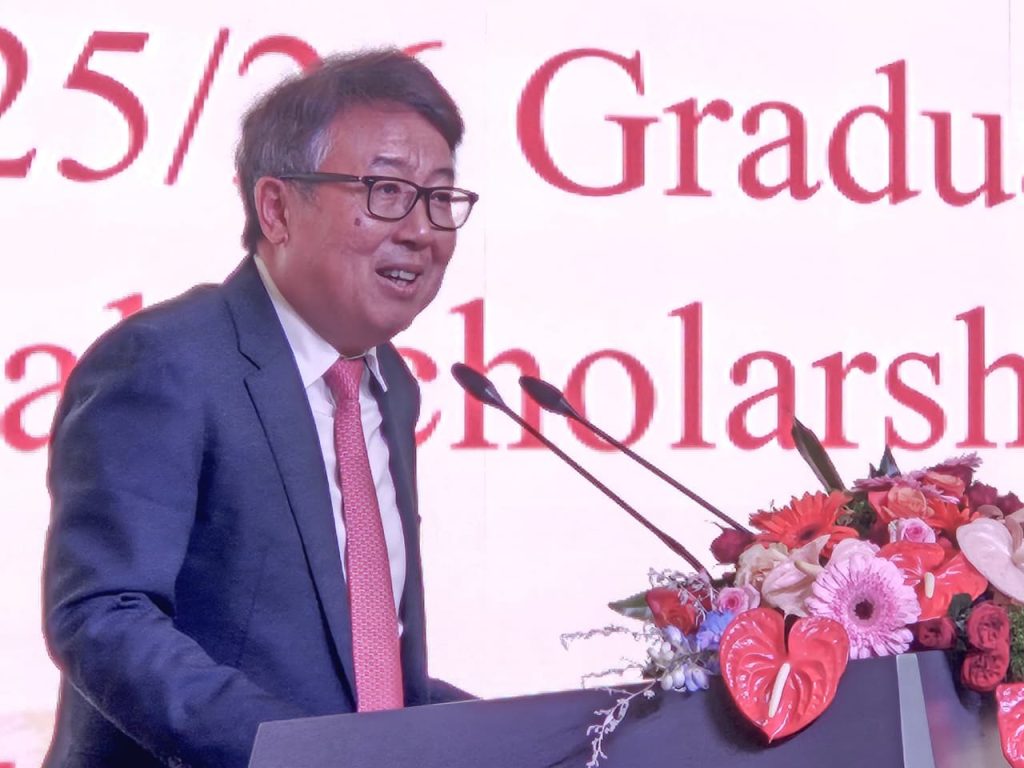
The students were officially welcomed back at an event hosted by the Chinese Embassy in Pretoria on Friday, 23 January 2026. The event, led by H.E. Ambassador Wu Peng served as both a celebration and a networking platform, where potential employers including Chinese companies operating in South Africa engaged the returning cohort.
Speaking on the significance of the partnership, the Deputy Minister highlighted the strategic value of technical skills and international training in advancing South Africa’s long-term development goals.
“Studying in China can equip young South Africans with advanced technical skills, research exposure, and practical experience in priority sectors such as science, engineering, agriculture, digital technologies, and industrial innovation. We encourage young people to adopt a broader strategic perspective when considering opportunities to study abroad, not merely as individual academic pursuits, but as contributions to national development.”
The Deputy Minister further noted that aligning international training to local needs strengthens the Post-School Education and Training (PSET) sector and supports South Africa’s goals of industrialisation, competitiveness, and inclusive economic growth. The first cohort, she emphasised, represents “trailblazers who will define the character and long-term impact of this programme.”
The next cohort is expected to begin their studies sometime in 2026, continuing South Africa’s efforts to build a pipeline of skilled graduates capable of contributing to the NEV sector, renewable energy systems and the evolving industrial base envisioned under South Africa’s Automative Industry Master Plan 2035 and the JET Investment Plan.
As South Africa’s automotive sector adapts to the global transition towards electric mobility, China’s leadership in New Energy Vehicle (NEV) technology provides local students with valuable exposure to advanced manufacturing, innovation and future-focused skills.
This collaboration between government, TVET colleges, industry and international partners reflects a shared commitment to strengthening education-to-industry pathways and preparing young people for participation in the evolving green economy. Through strategic investments in skills development and global partnerships, the National Skills Fund (NSF) continues to play a catalytic role in building a future-ready workforce that drives inclusive growth and industrial transformation.
By Sivuyisiwe Hombile (Communication Officer)