Wednesday, 4 February 2026
The National Skills Fund (NSF) has noted The Citizen newspaper article published on Thursday, 29 January 2026 in which it alleges the NSF’s lack of accountability in how it spends public funds on aviation training.
The NSF wishes to reject this allegation and any implication that it is shielding aviation funding or any funding for that matter, from scrutiny. The reason for the aggregation of data is because the NSF’s Annual Report is compiled in line with the approved Annual Performance Plan, which requires learner data to be reported in aggregate rather than by specific sub-sectors such as aviation. The NSF as a public entity is required to comply with the Public Finance Management Act and other prescripts and guidelines of the Department of Planning, Monitoring and Evaluation as well as National Treasury guidelines in presenting its Annual Performance Report. This includes the tabling and appearing before the Portfolio Committee on Higher Education and Training, including submission of its plans and Annual reports to the Accounting Authority of the NSF, the department of higher education and training and also submits and presents its Annual Performance Plans and Annual Reports to the National Skills Authority (NSA) in terms of the Skills Development Act and Public Finance Management Act. As part of its Annual Report, the NSF includes a table of projects approved for funding through the NSF. This information is also available in the 2024/25 Annual Report which is on the NSF website and other sites. Page 202 to 215 of the report provides the name of contracted parties and contract value.
In addition, the Department of Higher Education and Training and the National Skills Authority conduct an evaluation study of the NSF which ultimately provides a comprehensive view of all the NSF projects, indicating the number of beneficiaries and the impact of all NSF projects. The 2015/16 – 2019/20 NSF evaluation study is available on the DHET website. The National Skills Authority has commenced with the NSF’s evaluation study that will cover the reporting period 2020 – 2025. Once completed, the results of the study will be made publicly available as has been done in the past.
In pursuit of strengthening accountability and transparency to the public, the NSF has recognised that more detail is required to be made available. As such at the end of 2025 a number of interventions have been initiated and implemented for additional transparency and accountability mechanisms being deployed while also adhering to all legislative and policy provisions when sharing information.
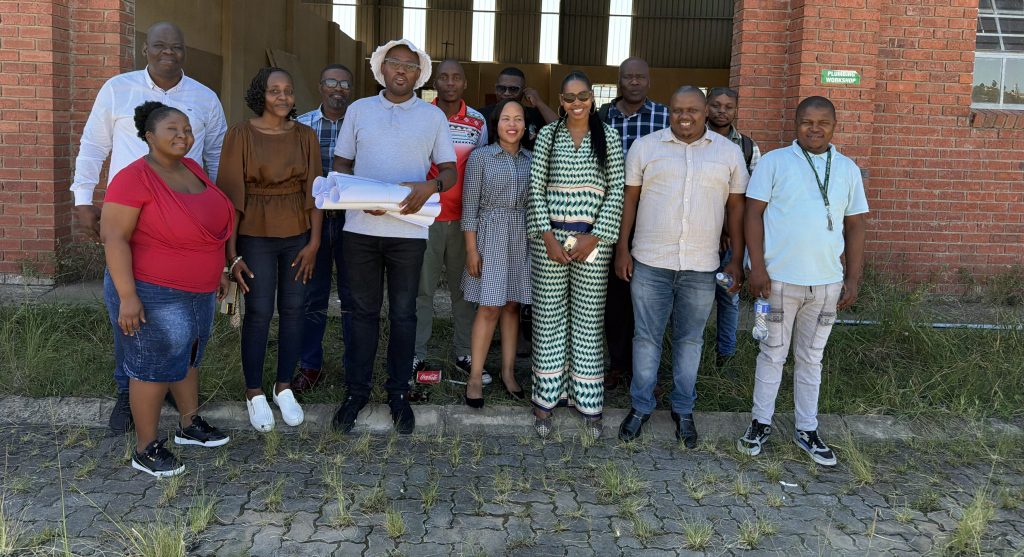
During 2025, NSF implemented and adhered to various oversight and accountability engagements that were widely documented in the media thus an indication of the transparency and accountability to which the NSF is committed. Some of these include the Portfolio Committee on Higher Education’s oversight visit conducted at the NSF funded project site in Gauteng in February 2025. These visits are public in nature and to an extend are covered through different media platforms. Through these visits, the portfolio committee gets an opportunity to engage with learners and understand the learners’ feeling about the NSF funded programmes in the main at PSET Institutions and selected Artisan Training project. The NSF launched the Ikhala TVET College’s Aliwal North Engineering Campus in August 2025, which was led by Deputy Minister Dube-Ncube as part of its infrastructure development programme in the TVET sector. There are numerous other such oversights and engagements widely documented.
In 2024, the NSF launched its website where it continues to share valuable information. This included the expansion and activation of its social media platforms in April 2025 where it continues to showcase testimonials from beneficiaries funded by the NSF and to educate the youth about the NSF and its responsibilities in skills development. This is also a reflection on the vital role of education and training institutions including TVET Colleges, CET Colleges, Universities and private Skills Development Providers accredited through quality assurance bodies as well as employers providing the requisite workplace experience. As stated previously the ecosystem of stakeholders are vital to ensure that funding can be directed to skills development particularly workplace opportunities provided by public and private employers, while also funding skills development that promotes self-employment particularly offered through Community Education and Training Colleges and Artisan development.
“The NSF continues to be transparent on its operations and how it manages the skills development projects it funds and implements through its different partners. It is for this reason that the NSF is working on making available, through its website, information on all its funded projects. This process requires that we comply with the Protection of Personal Information (POPI) Act; a process the NSF is already undertaking with the Information Regulator, an institution empowered to enforce the POPI Act compliance,” said the Acting CEO, Ms Melissa Erra.
Once completed and approval is given, this will enable the NSF to release on its website, names of the projects, the province where the projects are taking place, the amount allocated, duration and how many learners the projects will benefit, name of the Skills Development Providers through which the projects are implemented, contact details, etc
Stabilisation and Reforms
“It is no secret in the past few years, the NSF has been confronted with many challenges, many which weakened its ability to deliver on its mandate of skills development, reducing youth unemployment, and supporting post-school education and training. This signalled a need for a significant change in the NSF’s strategic positioning and operations. As of September 2024, with its new leadership, the NSF entered a transformation and reform journey that is built on transparency, accountability and service delivery. This required the new leadership to move with speed and agility to implement the recommendations of the Ministerial Task Team that conducted a Strategic Review of the NSF. In his address to the media in August 2025 on his plans for the Post-School Education and Training sector, Minister Buti Manamela said, “we have engaged both the Director-General and the Acting Chief Executive Officer of the NSF in accelerating the required legislative reforms we need to put in place in order to effect changes in the NSF.” He also spoke at length about the NSF reforms at his media briefing of 4 December 2025 where he outlined all the key interventions and progress to implement the MTT recommendations to stabilise, reform and transform the strategic mandate and operations of the NSF.
The NSF is already pursuing a targeted legislative path that would allow for the amendment of the Act, to ensure the required structural changes are implemented as quickly as possible. While this process is underway, as part of the stabilisation efforts, the NSF is prioritising the establishment of an NSF Advisory Committee to enhance efficiency and decision-making which will include oversight of reforms, strategic matters including project recommendations and operations including the delegations of Authority. The NSF leadership and staff is committed to implementation of these reforms to reposition and stabilise the Fund.
Digital Reforms
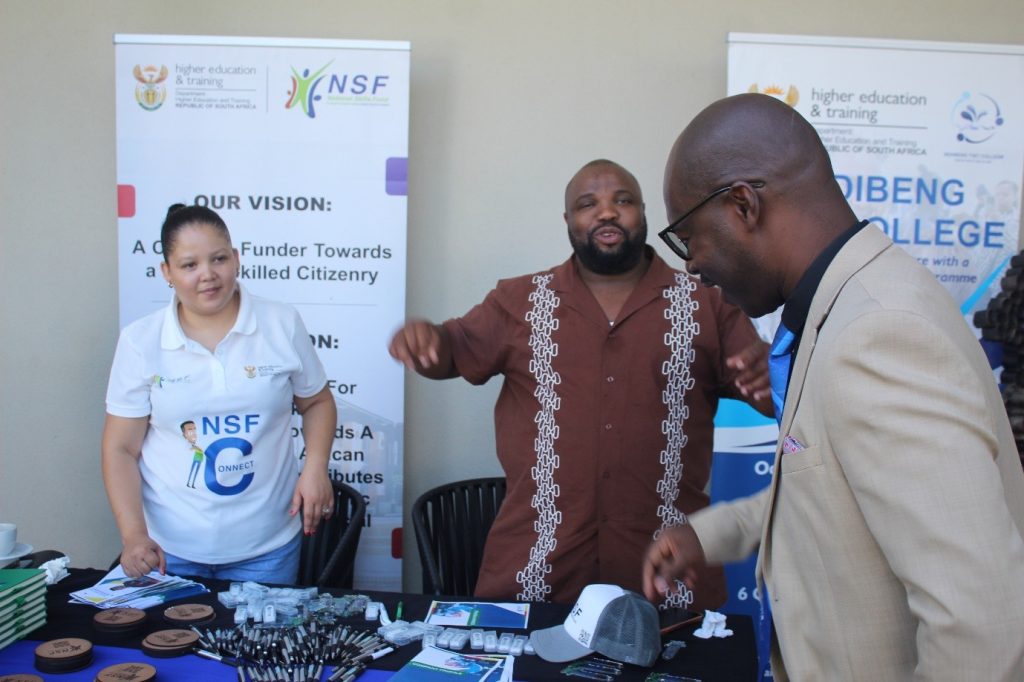
In October 2025, the NSF launched a new Enterprise Resource Planning system, internally named NSF Connect, a system central to ending years of manual bottlenecks. This system will enable real-time monitoring of spending and performance, automation of disbursements and support improved transparency and accountability in programme delivery. Alongside these digital reforms, the NSF is reviewing its strategic funding framework. Its emphasis on consequence management and clearing of irregular expenditure from prior years are all aimed at embedding financial discipline and result oriented management. At the official launch of the NSF Connect System in December 2025, Minister Manamela said the following, “The launch of this system is not just a celebration, but a declaration that we are shifting gears of the NSF into a new era, one rooted in accountability, transparency, agility and impact.”
Investigations
“Following President Ramaphosa’s signing of the proclamation enabling the Special Investigating Unit (SIU) to investigate allegations of maladministrator, improper conduct and misuse of fund in the NSF, we released a media statement in which we publicly committed the NSF’s full corporation with the investigation. This is indicative of a commitment to the reform and stabilisation process referred to above. The NSF continues to work closely and to cooperate with the SIU investigation, and will implement all recommendations of the SIU report, following the investigation.
NSF Aviation Projects
During the 2023/24 and 2024/25 reporting periods, the National Skills Fund (NSF) approved and funded Aerospace Training Academy of South Africa (ATASA): Avionics (Artisan Development), with R19.257 million approved and R13.1 million disbursed to date; Flyfofa: Private Pilot, Advanced Pilots Hour Building , Drone Pilot and Cabin Crew training, with R148 million approved and R23.6 million disbursed to date, Phila Jordan Capital for Avionics, Instrumentation, Aircraft Maintenance Mechanics, Structural Mechanics and related artisan development programmes, with R354 million approved and R156.5 million disbursed to date, and Elangeni TVET College for Aircraft Mechanic training with R35.7 million approved and R24.9 million disbursed to date.
For the two annual reports periods, a total of 342 learners were enrolled and still undergoing training, which the NSF continues to monitor.
Of the four, two projects had been reported for non-compliance. The NSF immediately activated remedial measures, to which both providers have remedied and continues to adhere and implement the project. The NSF continues to monitor the project and to work very closely with Skills Providers to ensure compliance, and at any stage where non-compliance arises the NSF will evoke the provisions of its Memorandum of Agreement and which will result in recoupment of funds as well as restriction of the SDP to do any work with NSF. During the media launch, 4 December 2025 the Minister in is briefing outlined the progress made through the SIU, State Attorney and recoupment processes for funds to be recouped from non-compliant projects. The commitment made to safeguard and ensure that the Skills Development Levies is directed to implement its made, remains a key priority of all NSF officials and stakeholders as per the statement issued in welcoming the SIU investigation.
All aviation-related interventions funded by the NSF are required to comply fully with the South African Civil Aviation Authority (SACAA) accreditation criteria. Compliance with the SACAA regulatory framework is a precondition for implementation and is continuously monitored throughout the project lifecycle as part of the NSF’s quality assurance, monitoring, and verification processes.
In respect of costing, the NSF applies an established cost benchmarking framework, applicable with socio-economic needs of beneficiaries and related training cost, to ensure programme costs are reasonable, market-related, and comparable across similar interventions. This benchmarking process is aimed at preventing stipend hopping promoting cost consistency, and safeguarding value for money, although there has been a need recently to review and revise some of these costs, since they have been set more than 5 years ago.
Governance
All NSF funding decisions are governed by strict legislative, regulatory, and governance frameworks, including robust internal controls, due diligence processes, and oversight mechanisms to ensure transparency and accountability in the use of public funds. Where allegations of wrongdoing arise, the NSF treats such matters with the utmost seriousness. Any credible information suggesting misconduct is referred to the appropriate authorities and is subjected to thorough investigation in line with applicable laws and policies.
Conclusion
The NSF is committed to ethical conduct, clean governance, and the responsible stewardship of public resources.
As the NSF, we remain focused on our mandate of expanding skills development and supporting initiatives that contribute to inclusive economic growth and job creation.
Enquiries:
Issued by the NSF Public Relations and Communication