By Denira Gounden
A student may gain knowledge in a classroom, but the journey towards becoming a skilled professional often requires something more: an employer willing to open the workplace door.
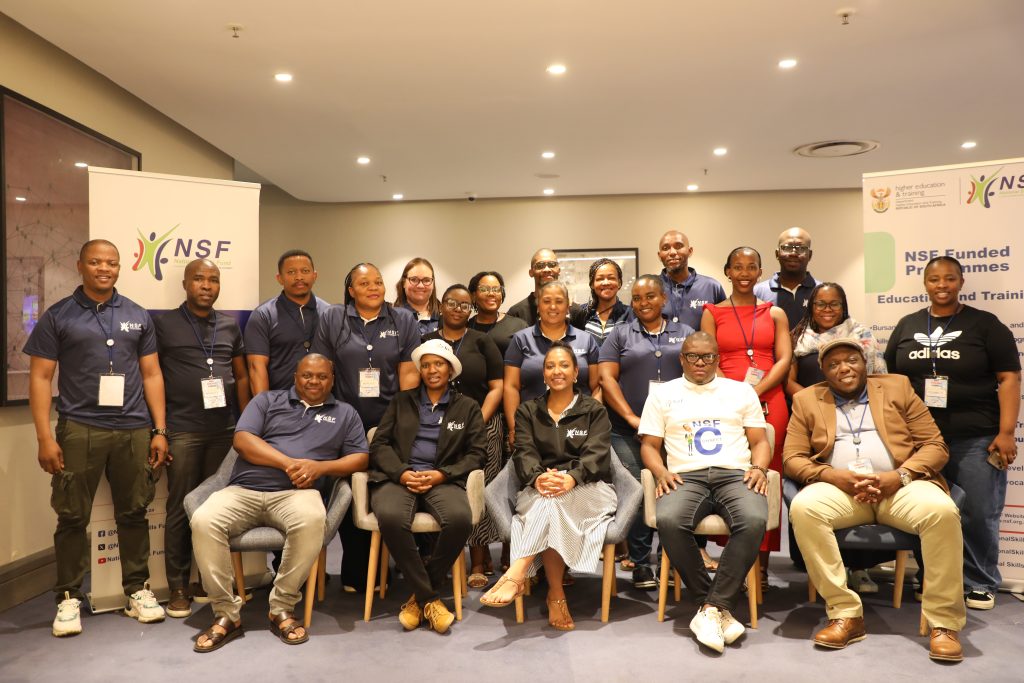
That message was at the heart of the Umgungundlovu TVET College Employers Brunch, recently held in Pietermaritzburg, where the National Skills Fund (NSF) joined the College, host employers and other industry stakeholders to strengthen partnerships that support skills development and improve pathways from education and training into the workplace.
The engagement highlighted the interconnected roles of TVET colleges, funders and employers in building an effective Post-School Education and Training (PSET) system. For students enrolled in occupational programmes in particular, partnerships with industry provide the practical workplace exposure needed to complement theoretical learning.
Addressing stakeholders, Umgungundlovu TVET College Principal, Ms Ntshangase, emphasised that successful skills development cannot be achieved by educational institutions working in isolation.
“Without industry you can never successfully implement an occupational programme,” said Ms Ntshangase.
She described productive partnerships between TVET colleges, funders and host employers as being “in the best interests of the country”, highlighting the contribution each partner makes towards developing skilled professionals who can participate meaningfully in the economy.

The NSF’s participation in the engagement reinforced its commitment to supporting skills development interventions that create meaningful opportunities for beneficiaries and contribute towards the objectives of the National Skills Development Plan (NSDP).
Speaking on behalf of the NSF, Assistant Director: KZN and Eastern Cape Regions – Skills Development Implementation (SDI), Mr Buntu Msengi, highlighted the critical role played by employers in providing beneficiaries with workplace exposure.
“Host employers are the main players in creating placement for beneficiaries,” said Mr Msengi.
His remarks underscored an important part of the skills-development value chain: funding and classroom-based learning must ultimately connect beneficiaries with environments where they can apply their knowledge, develop practical competencies and gain experience relevant to the labour market.
For the NSF, partnerships with TVET colleges, skills development providers and employers are therefore an important mechanism for translating investment in skills development into opportunities for beneficiaries.

The engagement also challenged misconceptions about the role of TVET colleges within South Africa’s education and training landscape.
Umgungundlovu TVET College official Mr Ramatema highlighted the range of qualifications and career pathways available through the TVET sector, including fields such as artisan development and financial management. He emphasised the role of colleges in producing graduates equipped with occupational and technical skills required in workplaces and communities.
The discussion reinforced the importance of positioning TVET education as a credible pathway into professional, technical and occupational careers rather than viewing colleges as institutions intended only for learners who have struggled academically.

The Employers Brunch ultimately provided more than an opportunity for stakeholders to meet. It created a platform to strengthen the partnerships required to move beneficiaries from learning to doing, and from training towards meaningful participation in the world of work.
Through continued collaboration between funders, institutions and industry, the NSF remains committed to supporting a PSET system in which skills-development investment contributes to capable individuals, responsive workplaces and a more highly skilled citizenry.