By Busisiwe Fobose
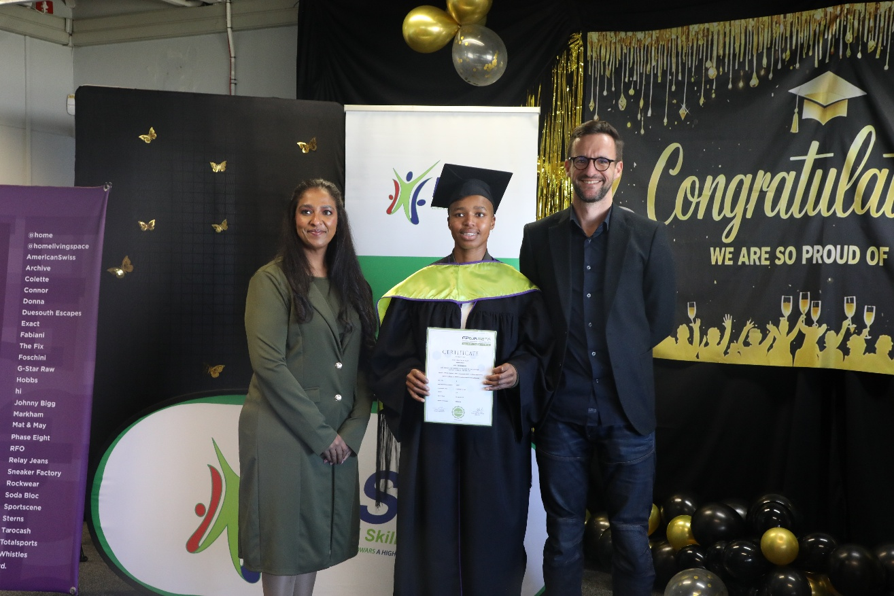
The National Skills Fund (NSF), an entity of the Department of Higher Education and Training (DHET), has supported the graduation of 124 students who completed the Clothing Manufacturing Process Course at Prestige College in Epping and Maitland. The graduation ceremony took place on 5 June 2026 and formed part of Youth Month commemorations.
The programme is part of the NSF’s ongoing investment in occupational training that supports youth employability and skills development in the manufacturing sector. The clothing and textile manufacturing sector requires practical, job-ready skills to support production and business growth. Through this programme, NSF has funded training that equips young people with foundational skills in clothing manufacturing processes.
The intervention supports the National Skills Fund’s mandate to expand access to post-school education and training (PSET), strengthen workplace readiness, and improve opportunities for youth participation in the economy.
The graduation ceremony brought together learners, parents, Prestige College representatives, industry stakeholders and government partners to recognise the completion of the programme. Guests included Members of Parliament Mr Ashley Sauls and Mr Walter Teboho Letsie, Chairperson of the Portfolio Committee on Higher Education and Training, as well as NSF Acting Chief Executive Officer Ms Melissa Erra.

The event provided a platform to reflect on the role of skills development in supporting employment creation and economic participation. Speaking on behalf of the graduating class, learners Sinesipho Finca and Zanele Kani expressed appreciation to NSF, DHET and Prestige College for providing them with access to structured training opportunities. They described their journey as one of discipline, teamwork and perseverance, moving from limited experience to successfully completing a recognised occupational training programme.
A total of 124 learners successfully completed the Clothing Manufacturing Process Course backed by NSF. The programme has strengthened practical skills in clothing manufacturing processes and improved the employability of the graduates within the textile and apparel value chain. It also supports pathways into self-employment and small business development.
Head of TFG Manufacturing and Prestige, Mr Sean Kirby, congratulated the graduates and acknowledged the support of families, management and programme partners. He encouraged graduates to continue building their skills and to pursue lifelong learning, on his speech he said to the learners ‘keep learning, the qualification you obtained today is a foundation not a ceiling’.
The Chairperson of the Portfolio Committee on Higher Education and Training, Mr Walter Teboho Letsie, encouraged graduates to use their skills to access employment and explore entrepreneurship opportunities. He emphasised that skills development must contribute to job creation and local economic growth ‘students should not be trained for the streets but setting them up for businesses that will create jobs and grow our economy’.
SPA for Logistics, Manufacturing and Skills Development, Ms Shevanna Singh Williams, recognised the role of NSF and Prestige College in supporting youth development and strengthening access to training opportunities.
NSF Acting Chief Executive Officer, Ms Melissa Erra, commended the graduates for their hard work and commitment. She acknowledged Prestige College for its role in delivering quality training that supports youth development and employability.
This intervention supports NSF priorities in skills development, youth employability and economic participation. It strengthens occupational training in the manufacturing sector and contributes to building a pipeline of skilled young people who can participate in the labour market or pursue entrepreneurial opportunities.
The programme also demonstrates the value of partnerships between government, industry and training providers in strengthening the post-school education and training system.
The National Skills Fund will continue to support occupational training programmes that respond to labour market needs and expand opportunities for young people. Continued collaboration with industry partners and training institutions remains central to improving access to skills development and strengthening economic participation.