Wednesday, 4 February 2026
The National Skills Fund (NSF) wishes to place on record that it remains committed to its legislative mandate, which is to support skills development initiatives that contribute to the country’s socio-economic development, job creation and transformation, in line with the National Skills Development Plan and other applicable prescripts which includes public accountability in its various forms, to present information on the entity in an ethical and accurate manner.
Yes, the NSF has in the previous years had investigations and more recently the Special Investigating Unit (SIU) investigation as of March 2025. This followed President Ramaphosa’s signing of the proclamation enabling the SIU to investigate, among others, allegations of corruption, maladministration and mismanagement of funds into the NSF. The NSF is cooperating in the investigation and works closely with the SIU to assist with any kind of information they need to assist the investigation process. The NSF also commits to implement any recommendations of the report, following the SIU’s investigation.
Concurrently, to safeguard the mandate of the Fund and strengthen its capability to implement the skills development mandate, the Ministerial Task Team (MTT) undertook a Strategic review of the NSF and recommended a blueprint for the stabilisation and repositioning of the NSF. The MTT was established in 2021 following years of poor audit outcomes and organisational drift.
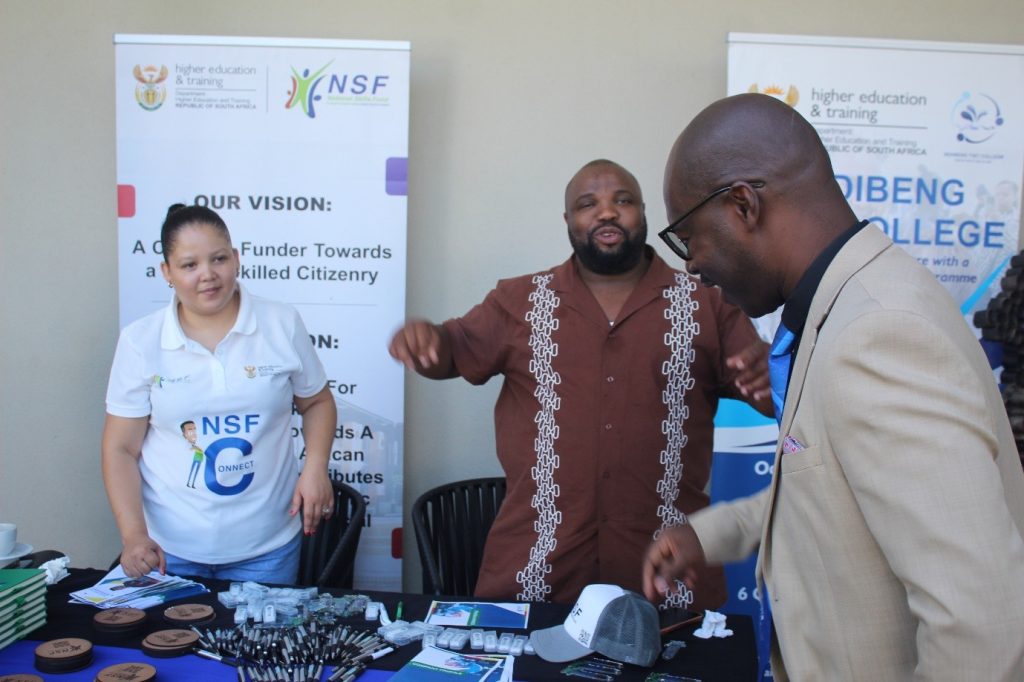
On 4 December 2025, the Minister of Higher Education and Training, Mr Buti Manamela held a media briefing and outlined all the key interventions and progress to implement the recommendations to stabilise, reform and transform the strategic mandate and operations of the NSF. The implementation of recommendations by the MTT, saw, among others, the launch of the Enterprise Resource System (ERP) in October 2025, internally named NSF Connect . The NSF Connect system launch marked a historic leap from an era of manual inefficiencies to a digital platform that will automate the NSF’s processes, eliminate errors, and bring real-time visibility into every rand spent. This system is the backbone of the NSFs turnaround strategy and the foundation of future clean audits. It will enable smarter tracking, performance monitoring, and faster delivery.
The NSF Executive and staff remain committed to the continued reform of the entity as per the MTT recommendations which proposed the amendment of the Skills Development Act for the NSF to fully operate as a legal entity and for the formal establishment of the NSF Board. Addressing the media briefing in August 2025 on his plans for the Post-School Education and Training sector, Minister Buti Manamela said, “we have engaged both the Director-General and the Acting Chief Executive Officer of the NSF in accelerating the required legislative reforms we need to put in place in order to effect changes in the NSF.” The NSF is already pursuing a targeted legislative path that would allow for the amendment of the Act, to ensure the required structural changes are implemented as quickly as possible. While this process is underway, as part of the stabilisation efforts, the NSF is prioritising the establishment of an NSF Advisory Committee to enhance efficiency and decision-making which will include oversight of reforms, strategic matters including project recommendations and operations including the delegations of Authority.
The amaBungane’s article presents a number of significant inaccuracies with the potential to tarnish the NSF’s image and thus undermine its impactful skills development interventions that are not acknowledged in the same story.
Inaccuracies
Firstly, the heading of the article appears to present the Fund that can be raided, which insinuates that the NSF is an entity without processes, structures nor a dedicated and committed staff compliment dedicated to implementing and achieving its skills development mandate. This is inaccurate. All NSF-funded projects are subjected to rigorous governance processes, including due diligence, approval protocols, monitoring, and compliance relevant regulatory frameworks. Where projects have undergone the value chain of evaluation and assurance and approval, a legal memorandum of agreement is entered into, roles and responsibilities are clearly defined, and accountability mechanisms are put in place to ensure value for money and the achievement of agreed outcomes, outputs and activities and financial implementation plans as part of the memorandum of agreement.
Stakeholder Engagement
Secondly, the article insinuates that engagements with stakeholders is irregular. Workplaces, employers in the public and private sector, whether locally or across the country, as well as PSET institutions, are key stakeholders of the NSF. Without this ecosystem of stakeholders and institutions, the realisation of relevant skills development interventions would not be possible. As part of its stakeholder management, the NSF engages with stakeholders to set out the National Skills Fund Strategic Plan and Annual Performance Plan outcomes, outputs, targets and priorities that include workplace based learning programmes, including learnerships, apprenticeships, occupational programmes and skills programmes, as part of ensuring skills development opportunities and spaces are made available for skills development.
The National Skills Fund proactively seeks to support skills development opportunities, as workplace experience and exposure can only be made available through employers (publicly and privately owned). These interventions must respond to the occupations in high demand as well as the Medium Term Development Plan. In order to achieve its mandate the coordination and engagement with stakeholders is required. However, any proposals submitted to the NSF will be subjected to the approved processes of the NSF including the various assurance and recommendation structures of the NSF. This is tested at various stages by audit, risk and compliance, and where any findings are identified, the requisite management controls and consequence management will be implemented, including the restriction of Skills Development providers or Labour Relations processes. As of September 2024, the NSF management has implemented and cooperated to strengthening and improving its governance and accountability.
Thirdly, it is important to clarify that the receipt and evaluation of proposals is the purview of the operations and designated staff of the NSF and as of October 2024 all proposals are submitted to a dedicated email that is subjected to audit processes. Thus, it is inaccurate that the Minister, DG or the Acting CEO evaluates proposals.
Pulling out of a deal
As it was made clear to amaBhungane during their investigation, the NSF does not have and has not entered into any funding agreement with either Equator Holdings nor PetroSA, nor has it released any funds in respect of the proposal referred to in the amaBhungane story.
The NSF would not release any funding without a signed agreement. The insinuation therefore, that the NSF pulled out of the deal with PetroSA, is misleading. The NSF could not have pulled out of a deal to which it was never part of as there was no approval of such a project.
Investigation
“We noted with concern, the allegations by amaBhungane , against NSF officials involved in the PetroSA matter. Once the matter came to the attention of management, and noting the level of detail required, management considered that it is prudent to test the veracity of the allegations while noting that the proposal in question was not processed and received some time ago. It was considered that the investigation may provide the NSF with insights on further interventions that eliminate perceptions of or evidence of maladministration or misappropriation of funds. While the NSF outlines its strategic mandate and priorities, some proposals submitted deviate and subject to processes, cannot be considered. We have therefore, in December 2025, following amaBhungane’s enquiry, obtained approval from the Accounting Authority, to institute an investigation into the Equator Holdings proposal. Due process is underway in line with applicable legislation and governance frameworks. It is through this process that all necessary parties will be engaged with, including officials. I must also indicate though, that as a matter of principle, the National Skills Fund will not conduct this investigation through the media and will allow the appropriate processes to run their course, until the investigation is completed. Only at this point will we be able to implement the recommendations,” said Acting CEO, Ms Melissa Erra.
To report fraud at the Department of Higher Education and Training (DHET), you can use their official channels, including a dedicated hotline to report fraud or corruption anonymously by calling the DHET hotline at 0800 872 222. This number is toll-free.
It is only through validated and reliable assessment of all the information that the entity can improve its efficiencies but also safe guard the fund, while abiding to the legislation, policies, principles of fairness, transparency, accountability and access to skills development interventions.
Enquiries:
Issued by the National Skills Fund: Public Relations and Communication