By Sivuyisiwe Hombile
The 2026 Outcomes Finance Alliance (OFA) Summit, hosted in partnership with the South African Medical Research Council (SAMRC), the Presidency Youth Employment Initiative (PYEI), the State Secretariat for Economic Affairs (SECO), UBS Optimus Foundation, Levoca and the Foreign, Commonwealth & Development Office (FCDO), brought together global leaders committed to advancing outcomes-based approaches to development finance.
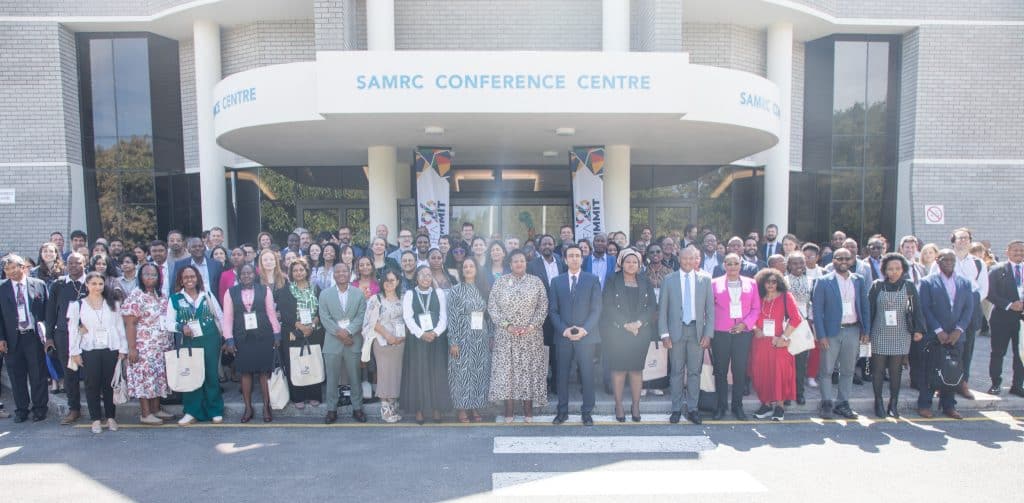
Held over three days, the Summit convened delegates from more than 28 countries, including South Africa, Kenya, Singapore, Colombia, Switzerland and the United Kingdom. Participants represented government, the private sector, philanthropy and multilateral institutions, including organisations such as iGravity, IXO World, Fundación Santo Domingo and the Ocean Risk and Resilience Action Alliance (ORRAA). At its core, the gathering focused on a critical question: how can financing be structured to deliver measurable and meaningful impact in people’s lives?
Proceedings began at the SAMRC Conference Centre, where Deputy Minister in the Presidency, Nonceba Mhlauli, delivered the opening address, highlighting the growing importance of outcomes-based financing (OBF).
“Across the globe, we are confronted with complex and interconnected challenges. Youth unemployment continues to rise in many regions. Poverty remains persistent. Education systems are under pressure to deliver relevant skills. Health systems are stretched. Climate change is intensifying vulnerabilities, particularly in developing economies. At the same time, fiscal space is constrained. Governments are being called upon to do more with less, while citizens are rightly demanding accountability, transparency, and results”, said Deputy Minister.
Outcomes-based financing (OBF), which links funding to verified results rather than activities, emerged as a central theme. The approach is gaining traction globally as a practical way to strengthen accountability, improve efficiency and drive innovation in service delivery.
Deputy Minister of Higher Education and Training, Dr Mimmy Gondwe, opened the panel discussion sessions alongside India’s Minister of Skills Development and Entrepreneurship, Shri Jayant Chaudhary, together with Christian Brandli, Head of Private Sector Development at the State Secretariat for Economic Affairs (SECO).
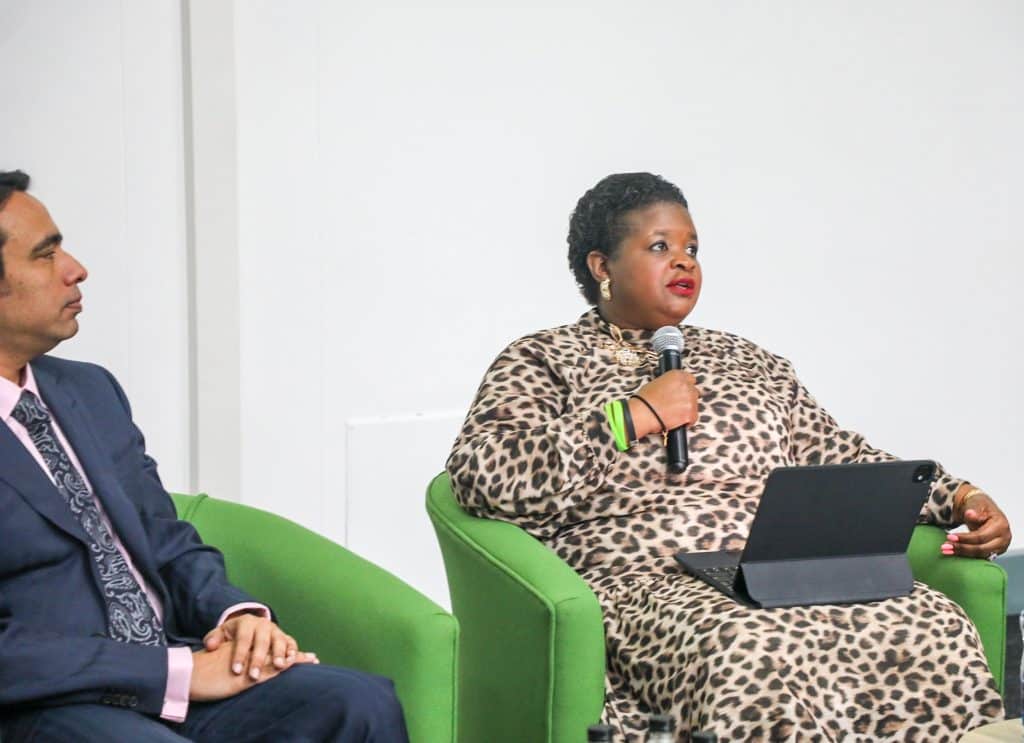
Deputy Minister of Higher Education and Training, Dr Mimmy Gondwe, speaking during a panel discussion on outcomes-based financing, entrepreneurship, and creating sustainable opportunities for young people through skills development and innovation.
“Outcomes-based financing has the potential to also provide a powerful mechanism to support entrepreneurship. By linking funding to measurable outcomes such as business formation, sustainability, revenue generation and job creation, we can enable young people not only to seek work, but to create it. This is particularly important in township and rural economies, where entrepreneurship is often the most immediate and viable pathway to economic participation. With the right support, young people can build enterprises in areas such as digital services, e-commerce, and local innovation.” – highlighted Dr Gondwe
Discussions throughout the Summit explored how OBF is evolving from pilot initiatives into scalable funding models. Delegates emphasised the importance of strong partnerships, reliable data systems and independent verification in ensuring that outcomes-based approaches deliver real impact.
Making a presentation at the Summit, NSF Acting CEO, Ms Melissa Erra, positioned the National Skills Fund as a key driver of inclusive economic growth and employment creation. She highlighted priorities including strengthening governance, improving delivery systems and enhancing data capabilities to better track outcomes and accountability.
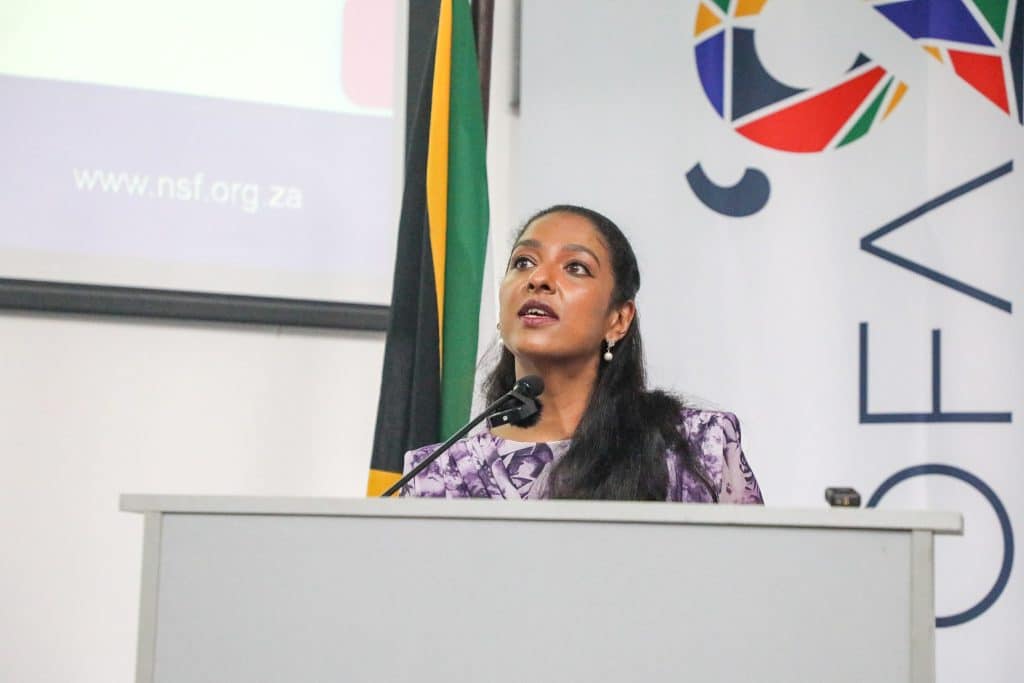
Acting Chief Executive Officer (ACEO) of the National Skills Fund (NSF), Melissa Erra gives a keynote address on day 2 of the Summit.
The Summit also examined how outcomes-based approaches can be embedded within public sector systems, with a focus on aligning policy, funding mechanisms and performance management frameworks.
A strong continental perspective emerged, with African stakeholders highlighting both the opportunities and practical challenges of scaling OBF across diverse contexts. Discussions focused on building institutional capacity, strengthening data systems and supporting the growth of impact-driven enterprises.
The Summit concluded with a clear call to move from dialogue to implementation. Priorities identified included scaling outcomes funds, strengthening pipelines of investable programmes and embedding an outcomes-driven mindset across institutions.
The OFA Summit 2026 reinforced that outcomes-based financing is increasingly shaping the future of development finance. By linking funding to results, it offers a more accountable and impact-focused approach to addressing complex social and economic challenges.